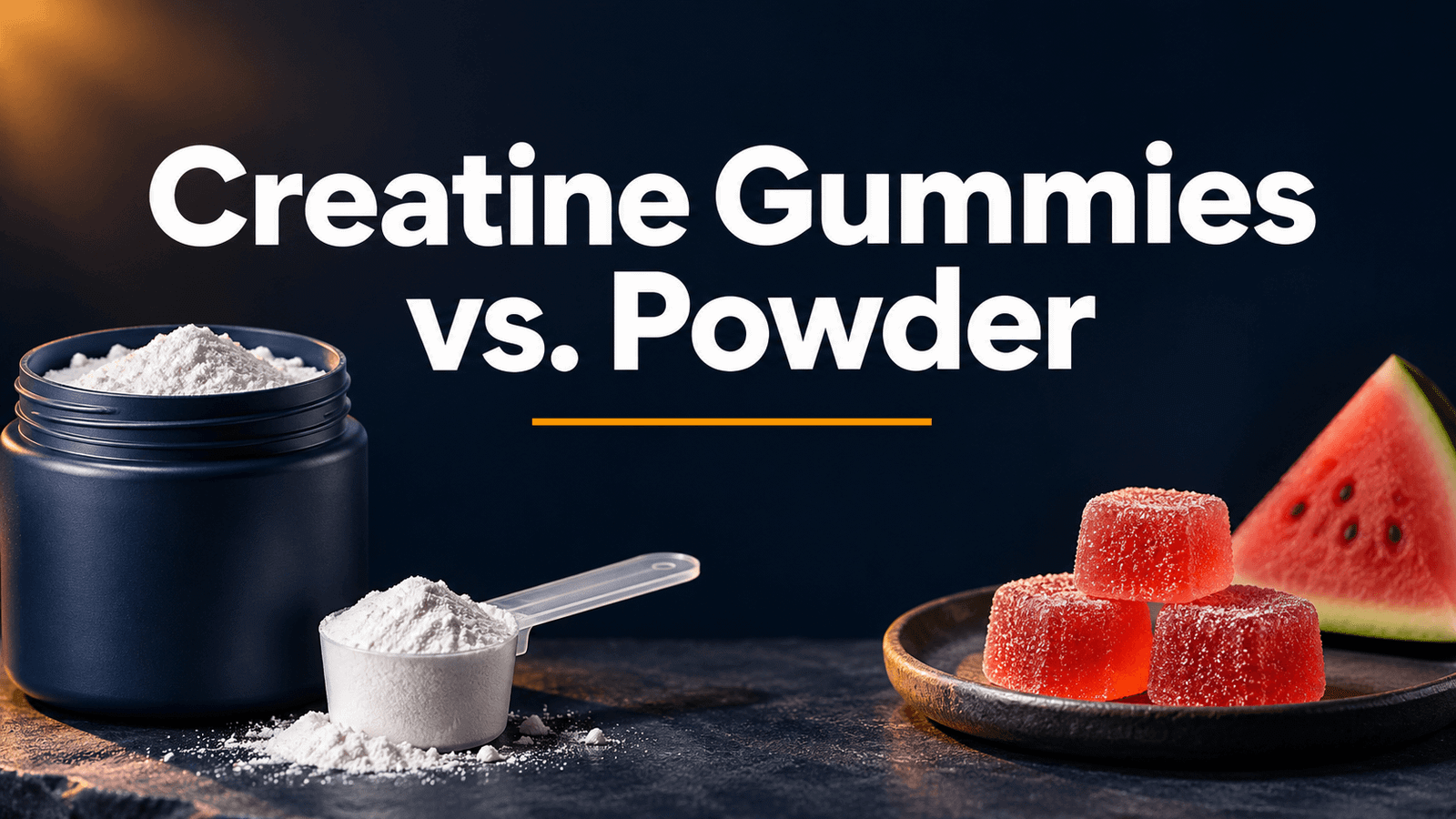
When comparing creatine gummies vs. powder, start with the grams of creatine monohydrate in a labeled serving and the total grams in the package. Plain powder is the easier format to compare when you want a short ingredient list and a clearly measured serving. Gummies may fit better when mixing a drink would make you skip it. Read the gummy count, the additional ingredients, and the cost for an equivalent amount before buying.
Affiliate disclosure. As an Amazon Associate I earn from qualifying purchases.
Creatine gummies vs. powder: three labels at a glance
| Product and exact variant | Labeled serving | Total creatine monohydrate by label |
|---|---|---|
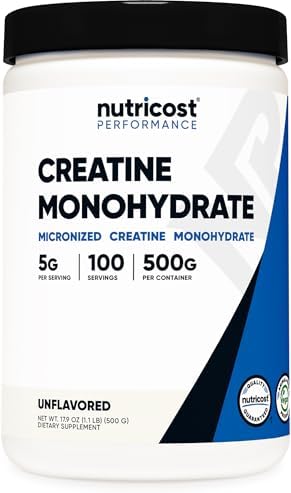
| Nutricost unflavored powder, 500 g | 5 g. 100 servings. | 500 g |
| Thorne unflavored powder, 90 servings | 5 g. 90 servings. | 450 g |
| Create Watermelon gummies, 90 count | 4.5 g per 3 gummies. 30 servings. | 135 g |
We checked the U.S. product listings on November 28, 2026 and compared the stated amounts with manufacturer information where available. The totals are label arithmetic. Men’s Wellness Insider did not test these products for potency, taste, or mixability. The Amazon Diet & Sports Nutrition list showed these three formats in its top ten during the check. That is a snapshot of a category ranking. Amazon Best Sellers in Diet & Sports Nutrition.
1. Nutricost unflavored powder for a straightforward comparison
The exact 500 g listing declares 5 g of micronized creatine monohydrate per serving and 100 servings. If you want to compare tubs, write down the total creatine first. The package has 100 units of 5 labeled grams, so its cost per 5 grams is the current price divided by 100. Check the unflavored variant when shopping. Flavored versions can have different ingredients or a different total weight. Nutricost manufacturer label.
2. Thorne powder if you want to verify sports certification
The 90-serving version lists 5 g of creatine monohydrate per serving. Its label therefore represents 450 g, or 90 five-gram units. If the selling price is the same as the 500 g tub, it costs more per 5 g simply because there are fewer units. Check the exact packaging and lot against the NSF Certified for Sport product registry if that certification is part of your decision. The registry is the place to match a product name and variant.
Check Thorne Creatine, 90 servings, on Amazon
3. Create Watermelon gummies for a measured, portable serving
The Watermelon 90-count product declares 4.5 g per three gummies. One gummy therefore represents 1.5 labeled grams. The pouch contains 30 labeled servings rather than 90. Gummy ingredients and sugar can vary by flavor or revision. Read the Supplement Facts panel and the other ingredients for the exact flavor you add to your cart. Create’s Watermelon product page.

How to compare creatine gummies vs. powder by cost
Cost per 5 labeled grams = current package price ÷ total labeled creatine grams × 5. A 90-count gummy package at 1.5 g per gummy contains 135 labeled grams, or 27 units of 5 grams for price comparison. That 27 is the comparison denominator. The pouch still has 30 manufacturer-defined servings. If any of these packages hypothetically cost $27, the cost per 5 g would be $0.27 for the 500 g powder, $0.30 for the 450 g powder, and $1.00 for the gummies. These are illustrative prices.
For a creatine gummies vs. powder comparison, count from the Supplement Facts panel first. Also check that creatine monohydrate appears as its own measured ingredient. Some pre-workout blends combine multiple ingredients in a single number. The same distinction matters when comparing other sports supplements. See our guide to reading a citrulline malate label.
Creatine gummies vs. powder: what the research can tell you
Creatine monohydrate is the form most studied for repeated, high-intensity efforts. The evidence on that ingredient cannot verify the content of a specific pouch or show that a gummy, capsule, and powder deliver identical results in every setting. For shoppers comparing creatine gummies vs. powder, the practical first step is to match the form and the labeled amount and look for product-specific testing if that matters to you. NIH Office of Dietary Supplements evidence review.
The NIH review notes that creatine can increase body weight through water retention and that some people report gastrointestinal discomfort. If you have kidney disease, take prescription medicines, or are being evaluated for a kidney problem, discuss supplement use with your clinician. This buying guide is for information and does not give a personal dosing plan.
How to compare creatine gummies vs. powder for a month
Some retailers show a subscription price beside a one-time price. Use the same purchase type and include shipping if it changes your total. Then calculate the cost of a month at the labeled serving you actually plan to use. A 30-serving gummy package lasts 30 days at one labeled serving per day. A 100-serving powder tub lasts 100 days under the same one-serving-per-day assumption. Those servings contain different amounts of creatine, so keep the 5-gram cost comparison alongside the monthly estimate.
Check the other ingredients before you pay for portability. A flavored gummy may use sweeteners, acids, or a gelling agent that a single-ingredient powder does not need. A flavored powder may have additional ingredients too. If you are avoiding a specific sweetener or food allergen, check the exact flavor and the package advisory. The ingredient panel is a more useful shopping source than a description such as “clean” or “natural.”
Use the listing photo to match the label, flavor, and count. Then compare that photo with the product that arrives, especially if a retailer combines several variants on one page. For a certification check, read the registry entry for the actual product and package rather than applying a badge from one flavor or size to the whole brand.
Frequently asked questions
Creatine gummies vs. powder: does one gummy equal one scoop?
In these examples, one Create gummy is labeled 1.5 g and one Nutricost or Thorne serving is labeled 5 g. Compare grams and follow the instructions for the product you choose. The label comparison is a way to read the package, not a direction to take extra gummies.
Does a higher Amazon rank tell me which is better for me?
A category rank reflects relative sales activity in that category at the time you view it. For choosing a product, compare the labeled form, verified serving, ingredients, and how you will use it.