Affiliate disclosure: This article contains affiliate links, including links to Amazon and to ProstaDefend, a paid partner. If you buy through them we may earn a commission at no extra cost to you. See our full disclosure.
Last updated: October 2026. We re-checked every product and listing in this guide.
Quick answer: the best prostate supplements combine ingredients that have been tested in men with urinary symptoms: beta-sitosterol, pygeum and saw palmetto extract. For most men a multi-ingredient formula such as Life Extension Ultra Prostate Formula is the simplest pick. Beta-sitosterol has the best trial results of the three, and saw palmetto on its own performs about the same as placebo. No supplement shrinks the prostate or replaces a medical check.
Choosing among the best prostate supplements is harder than it should be. Hundreds of bottles promise fewer night-time bathroom trips, yet most labels hide the doses and few ingredients have real trials behind them. This guide compares six options by ingredient and evidence, so you can see what you are paying for.
Urinary symptoms can have serious causes. See a doctor before you self-treat, and read what causes enlarged prostate symptoms first.
What are the best prostate supplements in 2026?
Here is our pick for each type of buyer:
- Best overall multi-ingredient formula: Life Extension Ultra Prostate Formula.
- Best saw palmetto plus beta-sitosterol combo: NOW Prostate Health Clinical Strength.
- Best without saw palmetto: NOW Beta-Sitosterol Plant Sterols.
- Best pygeum formula: NOW Pygeum & Saw Palmetto.
- Best single-ingredient saw palmetto: NOW Saw Palmetto Extract 320 mg.
- Best botanical blend sold direct: ProstaDefend, with a 90-day money-back guarantee.
| Product | Main ingredients | Where to buy | Best for |
|---|---|---|---|
| Life Extension Ultra Prostate Formula | Saw palmetto, beta-sitosterol, pygeum, nettle root, pumpkin seed, lycopene | Amazon | An all-in-one formula |
| NOW Prostate Health Clinical Strength | Saw palmetto, beta-sitosterol, lycopene, zinc, selenium, vitamin D | Amazon | Two key ingredients at a fair price |
| NOW Beta-Sitosterol Plant Sterols | Beta-sitosterol plant sterols | Amazon | Men who want no saw palmetto |
| NOW Pygeum & Saw Palmetto | Pygeum, saw palmetto, pumpkin seed oil | Amazon | Adding pygeum |
| NOW Saw Palmetto Extract 320 mg | Saw palmetto extract, pumpkin seed oil | Amazon | Starting simple |
| ProstaDefend | Saw palmetto, pygeum, nettle, red raspberry, soursop, cat’s claw | Official site only | A botanical blend with a guarantee |
The 6 best prostate supplements reviewed
1. Life Extension Ultra Prostate Formula: best overall
This is the most complete formula on our list. It pairs 320 mg of saw palmetto extract with beta-sitosterol, pygeum, stinging nettle root, pumpkin seed and lycopene. The serving is two softgels a day, so a 60-softgel bottle lasts a month.
It covers every well-known prostate ingredient in one product, and the label states each amount.
Best for: men who want one product instead of three. Skip if: you want to test a single ingredient first.
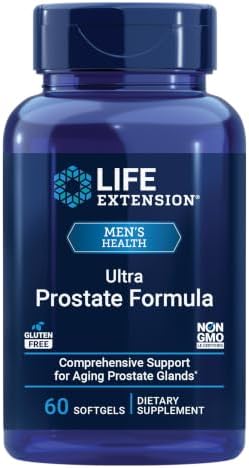
- Prostate health support – It’s essential for men to maintain prostate health as they age. Ultra Prostate Formula combine…
- Helps maintain already-healthy PSA – Ultra Prostate Formula helps address some of the most important factors for prostat…
- Healthy inflammatory response – Ultra Prostate Formula includes Boswellia serrata to support a healthy inflammatory resp…
2. NOW Prostate Health Clinical Strength: best saw palmetto and beta-sitosterol combo
NOW builds this softgel around saw palmetto, beta-sitosterol and lycopene, and says the strengths are comparable to those used in clinical trials. It also adds zinc, selenium and vitamin D. The 180-softgel bottle makes it one of the cheaper combination formulas per day.
The softgel contains gelatin, so it is not suitable for vegetarians.
Best for: the two most studied ingredients in one softgel. Skip if: you already take zinc or selenium elsewhere.

- TARGETED PROSTATE SUPPORTIVE NUTRIENTS*: Combination of botanicals and nutrients that support a healthy prostate gland*
- CLINICAL STRENGTH SAW PALMETTO, BETA-SITOSTEROL, AND LYCOPENE: Features ingredient strengths that are comparable to thos…
- CERTIFICATIONS/CLASSIFICATIONS: Made without Gluten, Dairy Free, Egg Free, Halal, Kosher contains Gelatin
3. NOW Beta-Sitosterol Plant Sterols: best without saw palmetto
Some men want a prostate supplement with no saw palmetto, because it did not help them or because they prefer the ingredient with better trial results. This softgel contains beta-sitosterol plant sterols and nothing else for the prostate. The label directs two softgels twice a day with meals.
NOW markets it mainly for cholesterol support, and it contains soy lecithin.
Best for: trying beta-sitosterol on its own. Skip if: you have a soy allergy or dislike taking four softgels a day.

- Beta-sitosterol plant 180 sgels by now foods
- NOWSUPPVitamin-Cholesterol/Cardiovascular Support- 180SGELS
- Now foods product upc: 733739030795
4. NOW Pygeum & Saw Palmetto: best pygeum formula
Pygeum is the bark extract of the African plum tree, and it is hard to find at a sensible price. This softgel combines it with saw palmetto in a pumpkin seed oil base. It is non-GMO and soy free, and it contains gelatin.
Best for: men who want pygeum without buying a large formula. Skip if: you want beta-sitosterol too.

- MEN’S HEALTH*/WITH PUMPKIN SEED OIL: NOW has utilized Pumpkin Seed Oil as a base for this product as a nutritional oil c…
- SUPPORTS HEALTHY PROSTATE FUNCTION*: NOW Pygeum & Saw Palmetto is a combination of botanical extracts that promote healt…
- CERTIFICATIONS/CLASSIFICATIONS: Non-GMO, Kosher contains Gelatin, Dairy Free, Egg Free, Kosher, Made without Gluten, Soy…
5. NOW Saw Palmetto Extract 320 mg: best single ingredient
One softgel supplies 320 mg of saw palmetto oil extract, the form and dose used in most trials. It is the cheapest way to find out whether saw palmetto does anything for you. Our guide to the best saw palmetto supplements compares five options.
Best for: starting simple. Skip if: you have already tried saw palmetto without benefit.

- 3 pack
- Supports Healthy Prostate Function*
- With Pumpkin Seed Oil
6. ProstaDefend: best botanical blend sold direct
ProstaDefend is a capsule that combines saw palmetto, pygeum and stinging nettle with red raspberry, soursop and cat’s claw. It is not sold on Amazon. It costs $49 to $79 per bottle on the official site, depending on the package, and comes with a 90-day money-back guarantee.
Two limits are worth knowing. The sales page does not state how much of each ingredient a capsule contains, and no clinical trial has tested the formula. It also has no beta-sitosterol.
Best for: men who want three studied botanicals in one capsule and value a long guarantee. Skip if: you want every dose stated before you buy.
Read our full ProstaDefend review →
Which prostate supplement ingredients actually work?
Three ingredients have been tested in randomized trials of men with urinary symptoms from an enlarged prostate. The results differ more than the marketing suggests.
| Ingredient | What trials found | Evidence |
|---|---|---|
| Beta-sitosterol | Improved urinary symptom scores and urine flow in a Cochrane review of 4 trials with 519 men | Moderate, short trials |
| Pygeum africanum | Modest improvement in symptoms in a Cochrane review of 18 small trials | Moderate, older trials |
| Saw palmetto extract | Little to no difference from placebo in a 2023 Cochrane review of 27 trials | Well studied, weak result |
| Stinging nettle root | A few trials suggest modest benefit | Limited |
| Pumpkin seed, lycopene, zinc | Few or small human trials for urinary symptoms | Not established |
None of these ingredients has been shown to shrink the prostate. They may ease symptoms for some men, and the effect is modest. For a closer look, read natural ingredients for prostate health.
Is beta-sitosterol better than saw palmetto?
On current evidence, yes. A Cochrane review of beta-sitosterol found better symptom scores and stronger urine flow than placebo, although the trials were short. The 2023 Cochrane review of saw palmetto found little to no benefit over placebo. That is why three of our picks include beta-sitosterol.
How do you choose a prostate supplement?
Use four checks before you buy:
- Stated doses: prefer labels that list the amount of each ingredient over a “proprietary blend”.
- Studied ingredients: look for beta-sitosterol, pygeum or a saw palmetto extract, not berry powder.
- Honest claims: avoid products that promise to shrink the prostate, cure BPH or replace medication.
- Cost per day: compare the daily cost, because serving sizes range from one to four softgels.
Give any product two to three months. If nothing changes, stop and talk to your doctor about options with stronger evidence, which we compare in BPH treatment options.
Are prostate supplements safe?
The main ingredients were well tolerated in trials, with mild stomach upset the most common complaint. Ask your doctor first if you take a blood thinner, finasteride, dutasteride or tamsulosin, or if you have surgery planned. Tell your doctor about any supplement before a PSA test. Our PSA test guide explains the test.
When should you see a doctor instead?
See a doctor for urinary symptoms that are new or getting worse. Get care quickly for blood in the urine, pain, fever or being unable to urinate. An enlarged prostate, an infection and prostate cancer can cause similar symptoms, as we explain in prostate cancer vs BPH. A supplement should never delay that check.
How we chose these products
We compared ingredients against the published trials, read each label and listing, and favored established brands with GMP manufacturing. We did not run our own lab tests. ProstaDefend is a paid partner, and we list its limits above so you can judge it fairly.
Best prostate supplements FAQ
What is the best prostate supplement?
For most men it is a multi-ingredient formula with stated doses, such as Life Extension Ultra Prostate Formula, which combines saw palmetto extract, beta-sitosterol, pygeum and nettle root.
What is the best over-the-counter prostate supplement?
NOW Prostate Health Clinical Strength is a good over-the-counter choice. It combines saw palmetto, beta-sitosterol and lycopene in one softgel at a low daily cost.
Is there a prostate supplement without saw palmetto?
Yes. A plain beta-sitosterol product such as NOW Beta-Sitosterol Plant Sterols contains no saw palmetto, and beta-sitosterol has better trial results for urinary symptoms.
Do prostate supplements really work?
Some may ease urinary symptoms a little. Beta-sitosterol and pygeum improved symptoms modestly in older trials. Saw palmetto alone performed about the same as placebo. None shrinks the prostate.
Is beta-sitosterol better than saw palmetto?
Current evidence favors beta-sitosterol. A Cochrane review found it improved symptom scores and urine flow, while a 2023 Cochrane review found little to no benefit from saw palmetto.
How long do prostate supplements take to work?
Trials usually lasted one to six months. Give a product two to three months of daily use before you judge it.
Can prostate supplements shrink an enlarged prostate?
No. No supplement has been shown to reduce prostate size. Prescription drugs such as finasteride can, and your doctor can explain those options.
Are prostate supplements safe to take every day?
The main ingredients were well tolerated in trials. Ask your doctor first if you take blood thinners or prostate medication, or if you have surgery planned.
Do prostate supplements affect PSA tests?
A large saw palmetto trial found no meaningful change in PSA. Still, tell your doctor about every supplement you take before a PSA test.
Is ProstaDefend sold on Amazon?
No. ProstaDefend is sold on its official website, where it costs $49 to $79 per bottle and comes with a 90-day money-back guarantee.
Bottom line
The best prostate supplements are the ones that state their doses and use studied ingredients. Life Extension Ultra Prostate Formula is our overall pick, NOW Prostate Health is the value combo, and plain beta-sitosterol suits men who want to skip saw palmetto. Keep expectations modest and see your doctor about symptoms that persist. For the bigger picture, read our prostate health after 50 complete guide.
References
- Wilt T, et al. Beta-sitosterols for benign prostatic hyperplasia. Cochrane Database of Systematic Reviews, 2000.
- Wilt T, et al. Pygeum africanum for benign prostatic hyperplasia. Cochrane Database of Systematic Reviews, 2002.
- Franco JVA, et al. Serenoa repens for the treatment of lower urinary tract symptoms due to benign prostatic enlargement. Cochrane Database of Systematic Reviews, 2023.
- NIH NCCIH: Saw Palmetto.
This article is for information only and is not medical advice. Supplements are not intended to diagnose, treat, cure or prevent any disease.