Disclosure: This article contains affiliate links. We may earn a commission if you purchase through them, at no extra cost to you. Learn more.
Choosing the best prostate supplements starts with the evidence, not the marketing. We dug into the clinical research to identify the best prostate supplements available in 2026 — here’s what actually works and what’s just marketing.
Top 5 Best Prostate Supplements: Quick Comparison
| # | Suplemento | Produto Top | Principal Benefício | Dose | Link |
|---|---|---|---|---|---|
| 🥇 1 | Saw Palmetto 320mg | NOW Supplements Saw Palmetto | Fluxo urinário · DHT blocker | 320mg/day | Ver → |
| 🥈 2 | Beta-Sitosterol | Super Beta Prostate | ↓ Sintomas BPH | 10-20mg/day | Ver → |
| 🥉 3 | Pygeum Africanum | Life Extension Ultra Prostate | Reduz inflamação prostática | 100mg/day | Ver → |
| 4 | Stinging Nettle Root | NOW Prostate Support | Inibe SHBG · saúde prostática | 120mg/day | Ver → |
| 5 | Pumpkin Seed Oil | Organic Pumpkin Seed Oil | Zinco · fluxo urinário | 1-2g/day | Ver → |
* Links com comissão de afiliado · Preços podem variar
Medical disclaimer: This article is for informational purposes only and does not substitute for professional medical advice. Always consult your doctor before starting any supplement. Full disclaimer.
When people search for the best prostate supplements, they usually mean these two. If you are one of the millions of men over 50 dealing with an enlarged prostate (BPH) or simply looking to support long-term prostate health, you have probably come across a long list of supplements. The problem: most of them are marketed aggressively with claims that far exceed the evidence. That is exactly why identifying the best prostate supplements backed by real clinical data matters. Below, we rank the best prostate supplements by strength of evidence. Our best prostate supplements picks reflect what the research actually supports.
This guide focuses on the two most researched, most used prostate supplements — saw palmetto and beta-sitosterol — breaks down what the clinical evidence actually shows, and gives you honest guidance on how to choose a quality product. We also cover additional ingredients worth considering.
→ Prostate Health After 50: The Complete Guide
Why Prostate Supplements Are So Popular — and So Confusing
BPH affects roughly 50% of men in their 50s, rising to over 80% of men in their 70s. The resulting urinary symptoms — frequent urination, weak stream, nighttime bathroom trips — significantly impact quality of life. Prescription medications like alpha-blockers (tamsulosin) and 5-alpha reductase inhibitors (finasteride) work, but they come with side effects that push many men toward natural alternatives.
This demand has created a crowded, poorly regulated supplement market. The majority of prostate supplements mix 5–15 ingredients at sub-therapeutic doses, making it impossible to evaluate efficacy. The smartest approach: focus on ingredients with actual clinical evidence at studied doses.
Saw Palmetto: What the Research Really Shows
Saw palmetto (Serenoa repens) is extracted from the berries of a small palm native to the southeastern United States. It is the most widely studied herbal supplement for BPH and the most commonly used.
Mechanism
Saw palmetto is thought to mildly inhibit 5-alpha reductase — the enzyme that converts testosterone to dihydrotestosterone (DHT). DHT is a primary driver of prostate cell growth. It may also have anti-inflammatory effects and reduce the binding of DHT to prostate cells.
Clinical Evidence
The evidence is genuinely mixed, and it is important to be honest about that:
- Older positive trials (1990s–early 2000s) suggested saw palmetto improved urinary flow and reduced nocturia modestly compared to placebo.
- The STEP trial (2006, NEJM) — 225 men, 1 year, 160 mg/day extract — found no significant improvement over placebo on urinary symptoms, flow rate, or quality of life.
- CAMUS trial (2011, JAMA) — 369 men, dose escalation up to 960 mg/day — also found no benefit over placebo.
- Meta-analyses show inconsistent results depending on extract quality and dose. Some Cochrane reviews suggest modest improvement in nocturia compared to placebo; others find no meaningful benefit.
Bottom line: Saw palmetto has a very strong safety profile and is well-tolerated. If it works for you, it likely produces a mild but real reduction in urinary symptoms. It is not a miracle cure, and high-quality trials at standard doses have not consistently shown significant benefit over placebo. Extract quality matters enormously — CO2-extracted, lipophilic extracts (standardized to 85–95% fatty acids) have a better evidence base than simple powders.
Standard Dose
160 mg twice daily of a lipophilic extract standardized to 85–95% fatty acids, OR 320 mg once daily. Higher doses (up to 960 mg) have been tested without added benefit in large trials.
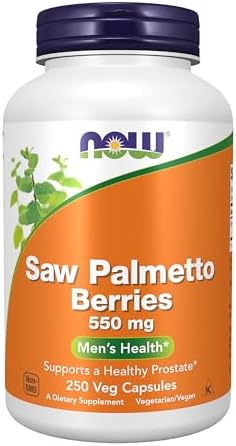
- MEN’S HEALTH*: Saw palmetto berries have naturally occurring compounds that are known for their prostate supporting prop…
- SUPPORTS A HEALTHY PROSTATE*: 1,100 mg of saw palmetto berries per serving
- CERTIFICATIONS/CLASSIFICATIONS: Soy Free, Non-GMO, Vegan, Nut Free, Made without Gluten, Corn Free, Dairy Free, Egg Free…
Beta-Sitosterol: Stronger Evidence, Less Hype
Beta-sitosterol is a plant sterol found naturally in nuts, seeds, fruits, and vegetables. It is also concentrated in some prostate supplements and is arguably better supported by clinical evidence than saw palmetto for urinary symptom relief.
Mechanism
Beta-sitosterol is thought to reduce inflammation in the prostate, inhibit the conversion of cholesterol to DHT, and modulate 5-alpha reductase. It may also reduce prostate cell proliferation through effects on growth factor signaling.
Clinical Evidence
- Cochrane review (1999, updated) of four double-blind RCTs found beta-sitosterol significantly improved urinary symptom scores and peak urine flow rate compared to placebo — with a meaningful effect size.
- Individual RCTs with 60–200 mg/day found improvements in International Prostate Symptom Score (IPSS) comparable in magnitude to some prescription alpha-blockers, though direct head-to-head studies are limited.
- Effect size: Roughly a 4–6 point improvement on IPSS, a reduction in post-void residual urine volume, and improved peak flow. These are clinically meaningful for symptomatic men.
Bottom line: Beta-sitosterol has a more consistent evidence base for urinary symptom relief than saw palmetto. If you are choosing between the two, or want to try an evidence-prioritized approach, beta-sitosterol is a reasonable first choice for symptomatic BPH.
Standard Dose
60–130 mg/day of beta-sitosterol (as the isolated sterol, not as part of a diluted “phytosterol blend”). Look for products that specify the beta-sitosterol content rather than listing it as part of a proprietary blend.

- TARGETED PROSTATE SUPPORTIVE NUTRIENTS*: Combination of botanicals and nutrients that support a healthy prostate gland*
- CLINICAL STRENGTH SAW PALMETTO, BETA-SITOSTEROL, AND LYCOPENE: Features ingredient strengths that are comparable to thos…
- CERTIFICATIONS/CLASSIFICATIONS: Made without Gluten, Dairy Free, Egg Free, Halal, Kosher contains Gelatin
Other Ingredients Worth Considering
Pygeum Africanum (African Plum Bark Extract)
A Cochrane review of 18 RCTs found pygeum produced a significant improvement in urinary symptoms and flow rate compared to placebo, with a moderate effect size. It is commonly combined with saw palmetto. Standard dose: 75–200 mg/day of bark extract. Used widely in Europe as a prescription treatment for BPH.
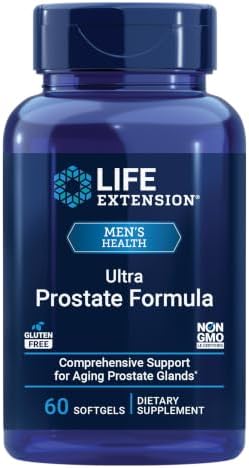
- Prostate health support – It’s essential for men to maintain prostate health as they age. Ultra Prostate Formula combine…
- Helps maintain already-healthy PSA – Ultra Prostate Formula helps address some of the most important factors for prostat…
- Healthy inflammatory response – Ultra Prostate Formula includes Boswellia serrata to support a healthy inflammatory resp…
Pumpkin Seed Oil
Several randomized trials (including a 12-month German study, 2014) found pumpkin seed oil improved IPSS scores significantly compared to placebo, with improvements continuing over 12 months. Mechanism is not fully understood. Typical dose: 320–1,000 mg/day. Well-tolerated with a good safety profile.
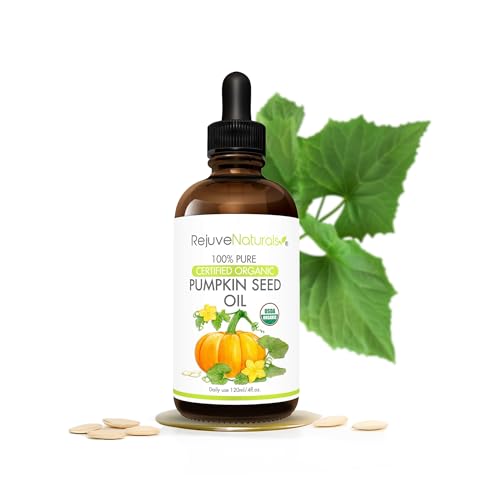
- Thinning Hair? Our unrefined pumpkin seed oil is rich in omega-3 and -6 fatty acids, thought to help promote scalp healt…
- Women report using our organic pumpkin oil to increase breast volume and to lift their feminine curves. Instead of using…
- Softens Parched Skin: Vitamin-rich oil helps to nourish and hydrate dry, rough skin on the face and body. Helps combat m…
Stinging Nettle Root (Urtica dioica)
Most commonly studied in combination with saw palmetto or pygeum. Some evidence for modest symptom relief. Used widely in German clinical practice. Typical dose: 120 mg twice daily of root extract. Generally well-tolerated.

- WITH STANDARDIZED SAW PALMETTO, STINGING NETTLE AND LYCOPENE: NOW Prostate Support is a blend of standardized extracts o…
- SUPPORTS PROSTATE HEALTH*: Saw palmetto has been shown in clinical studies to support prostate function.* Take 2 softgel…
- CLASSIFICATIONS/CERTIFICATIONS: Soy Free, Kosher Contains Gelatin, Egg Free, Dairy Free, Made without Gluten
Lycopene
A carotenoid concentrated in tomatoes and associated with prostate health in observational studies. Evidence for symptom relief in BPH is weaker, but lycopene shows potential for supporting prostate health broadly. Often added to comprehensive prostate formulas. Typical dose: 10–30 mg/day.
Zinc
The prostate contains the highest concentration of zinc of any soft tissue in the body. Zinc levels are significantly lower in malignant and BPH prostate tissue. Supplementation at modest doses (15–25 mg/day elemental zinc) may support prostate health, though evidence for symptom relief is indirect.
What to Avoid: Red Flags in Prostate Supplements
- Proprietary blends that hide individual ingredient doses — you cannot evaluate efficacy if you do not know the dose.
- Very large ingredient lists (10–15+ ingredients) at low doses — companies call this “comprehensive” but it is usually underdosing everything to hit a low price point.
- Disease claims (“shrinks prostate”, “cures BPH”) — these are illegal claims under FDA regulations and signal a poorly compliant company.
- No third-party testing — purity and potency testing by NSF International, USP, or Informed Sport is a meaningful quality signal.
- Saw palmetto powder vs. extract — simple powder has little to no evidence base; the studies use lipophilic extracts standardized to fatty acids.
How to Choose the Best Prostate Supplements: A Practical Framework
Given the evidence landscape, here is a practical decision framework for men considering prostate supplements:
- First: confirm your symptoms warrant treatment. Get a PSA test and discuss symptoms with your doctor. Rule out prostatitis, which is treated differently.
- For mild BPH symptoms: A trial of beta-sitosterol (60–130 mg/day) or pygeum is a reasonable starting point. Give it 3 months minimum — prostate supplements are slow to show effect.
- For moderate symptoms: Consider a combination product with beta-sitosterol + pygeum + pumpkin seed oil. Do not abandon conventional treatments without discussing with your doctor.
- For significant symptoms: Work with a urologist. Supplements can complement medical treatment but are not substitutes for alpha-blockers or 5-ARIs when warranted.
- Saw palmetto: A reasonable addition, particularly if you prefer a well-studied herbal ingredient despite mixed trial evidence. Choose CO2-extracted, standardized extract only.
Bottom line: the best prostate supplements pair beta-sitosterol with saw palmetto at clinically studied doses, from brands that publish third-party testing.
Key Takeaways
- Beta-sitosterol has the most consistent evidence for urinary symptom relief in BPH — consider it a first-line supplement choice
- Saw palmetto has a strong safety record and may help some men, but large trials have not consistently shown benefit over placebo; extract quality is critical
- Pygeum and pumpkin seed oil have reasonable evidence and are good additions to a combination approach
- Avoid proprietary blends, disease claims, and products without third-party testing
- Give any supplement at least 3 months before evaluating results
- Supplements complement — but do not replace — medical care for symptomatic BPH
Explore More on Prostate Health
Frequently Asked Questions
Does saw palmetto actually work for prostate health?
The evidence is mixed. Older trials suggested modest benefit, but large trials like STEP (2006) and CAMUS (2011) found no significant improvement over placebo. It has a strong safety profile, so it may still be worth trying, but it’s not a guaranteed fix.
What’s the difference between saw palmetto and beta-sitosterol?
Beta-sitosterol has more consistent clinical evidence for urinary symptom relief in BPH, with meta-analyses showing meaningful improvements in symptom scores and peak flow. Saw palmetto has weaker, more mixed evidence but a similarly strong safety record.
How long before prostate supplements start working?
Give any supplement at least 3 months before evaluating results. Prostate supplements are slow to show effect, unlike prescription medications, so short trials often lead men to give up too early.
Can supplements replace prescription BPH medications?
No. Supplements can complement medical treatment but are not substitutes for alpha-blockers (like tamsulosin) or 5-alpha reductase inhibitors (like finasteride) when those are medically warranted. Work with a urologist for moderate to significant symptoms.
What should I look for when buying a prostate supplement?
Choose products with third-party testing (NSF International, USP, or Informed Sport), that list individual ingredient doses rather than hiding them in proprietary blends, and avoid saw palmetto powder in favor of CO2-extracted, standardized extracts (85-95% fatty acids).
This article is for informational purposes only and does not constitute medical advice. Consult a qualified healthcare provider before making decisions about your health. Full medical disclaimer.

About David Hart
Men’s Health Writer & Researcher · B.S. Biomedical Sciences · 12+ years in evidence-based men’s health
David specializes in prostate health, testosterone, and sexual health — translating peer-reviewed research into clear, practical guidance for men over 40. All content is reviewed for medical accuracy before publication.