Quick verdict. In this Pure Encapsulations Magnesium Glycinate review, the 90-capsule bottle stands out for a clear label: one capsule provides 120 mg of elemental magnesium from glycinate. It is worth considering if you want a simple capsule and already have a reason to supplement. If you are buying mainly for sleep, the evidence for glycinate is limited and the strongest directly relevant trial used a different product. Manufacturer’s U.S. product sheet · 2025 sleep trial
As an Amazon Associate I earn from qualifying purchases.

Pure Encapsulations Magnesium Glycinate Supplement Facts
This review covers the U.S. 90-count capsules. Pure Encapsulations also sells larger bottles, powders and liquids. Check the serving size on the exact product you buy before comparing prices or magnesium amounts. U.S. Supplement Facts · Manufacturer’s product page
| Label detail | U.S. 90-capsule bottle |
|---|---|
| Form | Vegetarian capsules |
| Serving size | 1 capsule |
| Elemental magnesium | 120 mg from magnesium glycinate (29% Daily Value) |
| Other ingredients | Cellulose and water in the capsule, plus ascorbyl palmitate |
| Bottle reviewed | 90 capsules, 90 labeled servings. U.S. product MG9, Amazon ASIN B07P5K7DQP. |
The 120 mg figure is the amount of magnesium itself. Magnesium glycinate is the source named in parentheses. The manufacturer lists one active magnesium form, with no magnesium oxide listed. The label gives no separate amount for the glycine bound to magnesium. That matters when comparing the product to a study that reports both quantities. Manufacturer’s label · NIH Office of Dietary Supplements
Does Pure Encapsulations Magnesium Glycinate help with sleep?
A four-week randomized trial suggests that magnesium bisglycinate may modestly improve self-reported insomnia symptoms in adults with poor sleep. The 155 participants were assigned to a Biogena formulation that supplied 250 mg of elemental magnesium daily or a placebo. The sleep symptom score improved by 3.9 points in the magnesium group and 2.3 points in the placebo group, a difference of 1.6 points. The trial measured symptoms with questionnaires. Original randomized trial
One capsule of Pure Encapsulations supplies 120 mg, and two supply 240 mg. Those are label calculations. The study used a different product that also disclosed its glycine amount. A 2026 systematic review found inconsistent evidence for magnesium and sleep and identified no eligible trials that compared magnesium forms head to head. If poor sleep is persistent, discuss it with a healthcare professional. 2026 systematic review · Manufacturer’s precautions
How many capsules are in a serving, and when do you take them?
One capsule is one labeled serving. The manufacturer’s U.S. directions say to take the capsules with food and give a range of one to four per day. Three capsules supply 360 mg and four supply 480 mg. Both amounts exceed the U.S. adult upper limit of 350 mg per day from supplements and medications. Ask a clinician before using an amount above that limit, and count magnesium from multivitamins, antacids, laxatives and other supplements too. Evidence does not establish a best time of day for this particular product. Manufacturer’s directions · NIH intake and safety guidance
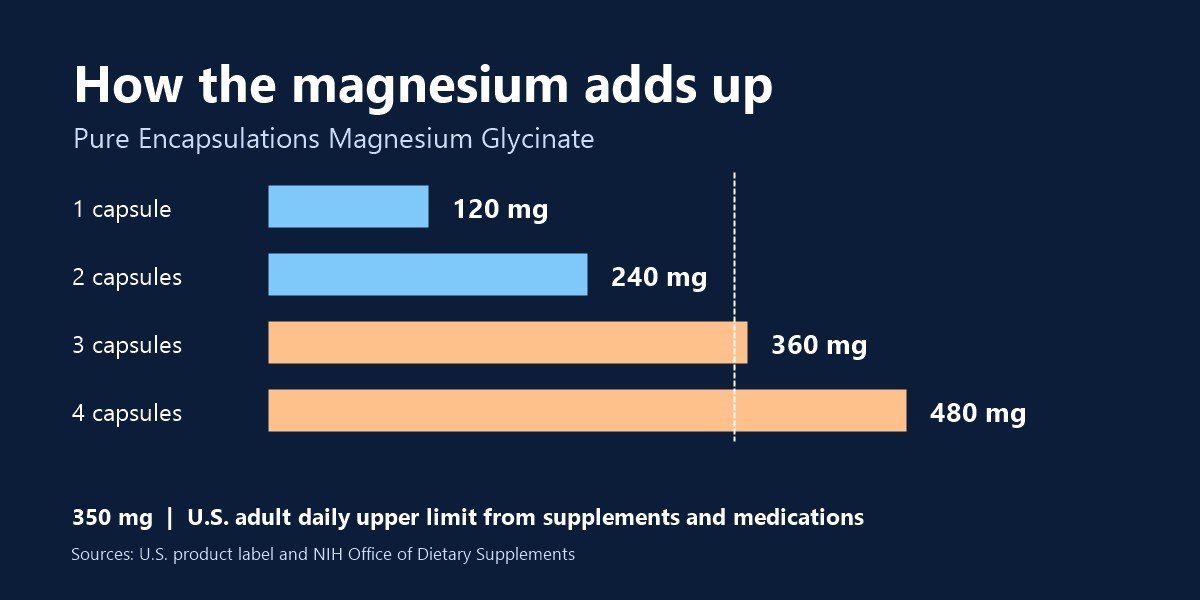
For men age 31 and older, the recommended intake is 420 mg per day from all sources, including food. The 350 mg supplemental upper limit covers a different set of sources and excludes naturally occurring magnesium in food. The 29% Daily Value printed on the bottle is a general U.S. labeling reference. NIH dietary reference intakes
Side effects and medication interactions
Supplemental magnesium can cause diarrhea, nausea and abdominal cramping. Reduced kidney function raises the risk of magnesium toxicity because the body has more difficulty clearing excess magnesium. If you have kidney disease, ask your clinician before using a magnesium supplement. NIH health risks from excess magnesium
Magnesium can interfere with absorption of some antibiotics, including tetracyclines and quinolones, and oral bisphosphonates. A pharmacist can confirm whether your specific medicines need to be separated from magnesium and by how long. NIH medication interactions
Is Pure Encapsulations Magnesium Glycinate third-party tested?
Pure Encapsulations says independent laboratories test its raw materials and finished products for purity and potency. NSF separately lists the company’s facility under its dietary supplement GMP program. That listing covers manufacturing practices. We found no public batch-specific certificate of analysis for this 90-count bottle in the sources reviewed. Buyers who need lot-level verification can ask the manufacturer for a report tied to the lot number. Manufacturer’s testing policy · NSF facility listing
Magnesium glycinate vs. citrate
Glycinate provides magnesium bound to glycine. Citrate provides magnesium bound to citrate, and some liquid magnesium citrate products are sold as saline laxatives for occasional constipation. If you are comparing dietary supplements, check the elemental magnesium per serving and the product’s intended use. Research has yet to establish a superior magnesium form for sleep. NIH notes on magnesium forms · MedlinePlus on magnesium citrate · Sleep evidence review
What does it cost per serving?
Divide the current bottle price by 90 for the cost of one 120 mg serving. For an equal-amount comparison with another brand, divide the bottle price by 108 to get the cost per 100 mg of elemental magnesium. This bottle contains 10,800 mg in total. For example, at a hypothetical $24 per bottle, that is about $0.27 per capsule or $0.22 per 100 mg. Compare the same elemental amount across products before paying more for a larger front-label number.
Frequently asked questions
Is it vegan and gluten-free?
The U.S. manufacturer marks the capsules as vegan and gluten-free. The capsule is made with cellulose and water. If you have a serious allergy, check the label on the bottle you receive and ask the manufacturer about the specific allergen. Manufacturer’s product details
Does it contain melatonin?
The U.S. Supplement Facts and ingredient list for the 90-count bottle do not list melatonin. Magnesium from glycinate is the only active ingredient listed. Manufacturer’s U.S. product sheet
How long does the bottle last?
The 90-capsule bottle contains 90 one-capsule servings. At one capsule a day it lasts 90 days, and at two a day it lasts 45 days. These figures describe bottle duration.
How fast does it work for sleep?
There is no established timeline for this bottle. The closest trial assessed several weeks of use with another formulation, so it cannot tell you whether a capsule taken tonight will change your sleep. For a related look at why sleep matters after 40, see our article on sleep and testosterone. Original randomized trial
Does it help with nighttime leg cramps?
Magnesium plays a role in normal muscle function. A Cochrane review found that magnesium supplements are unlikely to meaningfully prevent common skeletal muscle cramps in older adults. The review assessed several formulations, so it cannot establish a benefit from these capsules. Cochrane review on muscle cramps
How we reviewed this product
We compared the U.S. manufacturer’s label with the linked Amazon listing and checked the NSF facility record, NIH guidance and published sleep research. This review is based on documents and research. We did not test the capsules, send a sample for lab analysis or measure sleep changes firsthand. This article is for general information and does not replace individual medical advice.