Affiliate disclosure: This article contains affiliate links, including links to Amazon and to ProstaDefend, a paid partner. If you buy through them we may earn a commission at no extra cost to you. See our full disclosure.
Last updated: October 2026.
Quick answer: in the pygeum vs saw palmetto comparison, pygeum has slightly better trial results. A Cochrane review found that men taking pygeum were about twice as likely to report improved urinary symptoms as men taking placebo, with fewer night-time bathroom trips. Saw palmetto has been tested in larger and better trials, and it worked about as well as placebo. The pygeum trials were small, short and old, so neither herb is a proven treatment.
Pygeum vs saw palmetto is a common question because the two herbs sit side by side on most prostate supplement labels. One comes from the bark of an African tree and the other from the berries of an American palm. This guide compares what trials found, how much to take, how safe they are and whether taking both makes sense.
See a doctor about urinary symptoms before you self-treat. Start with what causes enlarged prostate symptoms.
Pygeum vs saw palmetto at a glance
| Pygeum | Saw palmetto | |
|---|---|---|
| Source | Bark of the African plum tree (Prunus africana) | Berries of the saw palmetto palm (Serenoa repens) |
| Main evidence | Cochrane review of 18 trials, 1,562 men | 2023 Cochrane review of 27 trials, 4,656 men |
| Effect on urinary symptoms | Modest improvement | Little to no difference from placebo |
| Night-time urination | Reduced by about 19% | Little to no difference |
| Quality of the trials | Small, short, mostly older | Includes large, long, well-run trials |
| Doses used in trials | 75 to 200 mg of extract a day | 320 mg of extract a day |
| Side effects | Mild, mostly digestive | Mild, similar to placebo |
What is pygeum?
Pygeum is an extract from the bark of the African plum tree, which grows in the mountain forests of central and southern Africa. It has been prescribed for urinary symptoms in parts of Europe since the 1960s. The bark contains plant sterols, including beta-sitosterol, along with fatty acids and other compounds.
The tree is listed as a vulnerable species, and international trade in its bark is regulated because of overharvesting. That is one reason pure pygeum supplements cost more than saw palmetto.
What is saw palmetto?
Saw palmetto is a small palm native to the southeastern United States. Supplements use an oil extract of its berries, standardized to 85–95% fatty acids and sterols. It is the best-selling herb for prostate health. Our guide to the best saw palmetto supplements compares five products.
Which works better for urinary symptoms?
Pygeum has the more encouraging numbers. A Cochrane review of pygeum pooled 18 randomized trials with 1,562 men. Men taking pygeum were about twice as likely to report an overall improvement in symptoms. Night-time urination fell by 19%, and peak urine flow rose by 23%.
Those trials have clear limits. They lasted about two months on average, used different doses and preparations, and rarely measured symptoms with the standard scores used today.
Saw palmetto has been put through tougher tests. The 2023 Cochrane review of saw palmetto pooled 27 trials with 4,656 men, including large trials lasting a year or more. It found little to no improvement in urinary symptoms compared with placebo.
So pygeum looks better on paper, but it has never faced a trial as rigorous as the ones saw palmetto failed.
How much pygeum and saw palmetto should you take?
Pygeum trials used 75 to 200 mg of standardized bark extract a day. The usual dose is 100 mg a day, taken as 50 mg twice daily or as one 100 mg dose.
For saw palmetto, the standard dose is 320 mg of extract a day, taken as one softgel or as 160 mg twice a day.
Which is safer: pygeum or saw palmetto?
Both were well tolerated in trials. Pygeum caused mild digestive side effects in a small number of men, at a rate similar to placebo. Saw palmetto showed the same pattern in larger trials.
Ask your doctor before taking either one if you use a blood thinner, finasteride, dutasteride or tamsulosin, or if you have surgery planned. Tell your doctor about any supplement before a PSA test.
Can you take pygeum and saw palmetto together?
Yes. Many formulas combine the two, often with nettle root or beta-sitosterol. No good trial shows that the pair works better than either herb alone, but there is no known harm in taking them together.
Products to consider
Pygeum and saw palmetto in one softgel
NOW Pygeum & Saw Palmetto combines both extracts in a pumpkin seed oil base. It is non-GMO and soy free, and it contains gelatin.

- MEN’S HEALTH*/WITH PUMPKIN SEED OIL: NOW has utilized Pumpkin Seed Oil as a base for this product as a nutritional oil c…
- SUPPORTS HEALTHY PROSTATE FUNCTION*: NOW Pygeum & Saw Palmetto is a combination of botanical extracts that promote healt…
- CERTIFICATIONS/CLASSIFICATIONS: Non-GMO, Kosher contains Gelatin, Dairy Free, Egg Free, Kosher, Made without Gluten, Soy…
Saw palmetto on its own
NOW Saw Palmetto Extract supplies 320 mg of oil extract per softgel, the dose used in most trials.

- 3 pack
- Supports Healthy Prostate Function*
- With Pumpkin Seed Oil
A full formula with pygeum, saw palmetto and beta-sitosterol
Life Extension Ultra Prostate Formula adds pygeum, beta-sitosterol and nettle root to 320 mg of saw palmetto extract. The serving is two softgels a day.
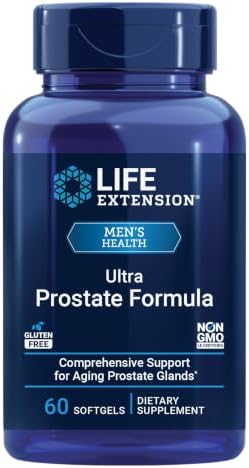
- Prostate health support – It’s essential for men to maintain prostate health as they age. Ultra Prostate Formula combine…
- Helps maintain already-healthy PSA – Ultra Prostate Formula helps address some of the most important factors for prostat…
- Healthy inflammatory response – Ultra Prostate Formula includes Boswellia serrata to support a healthy inflammatory resp…
A botanical blend sold direct
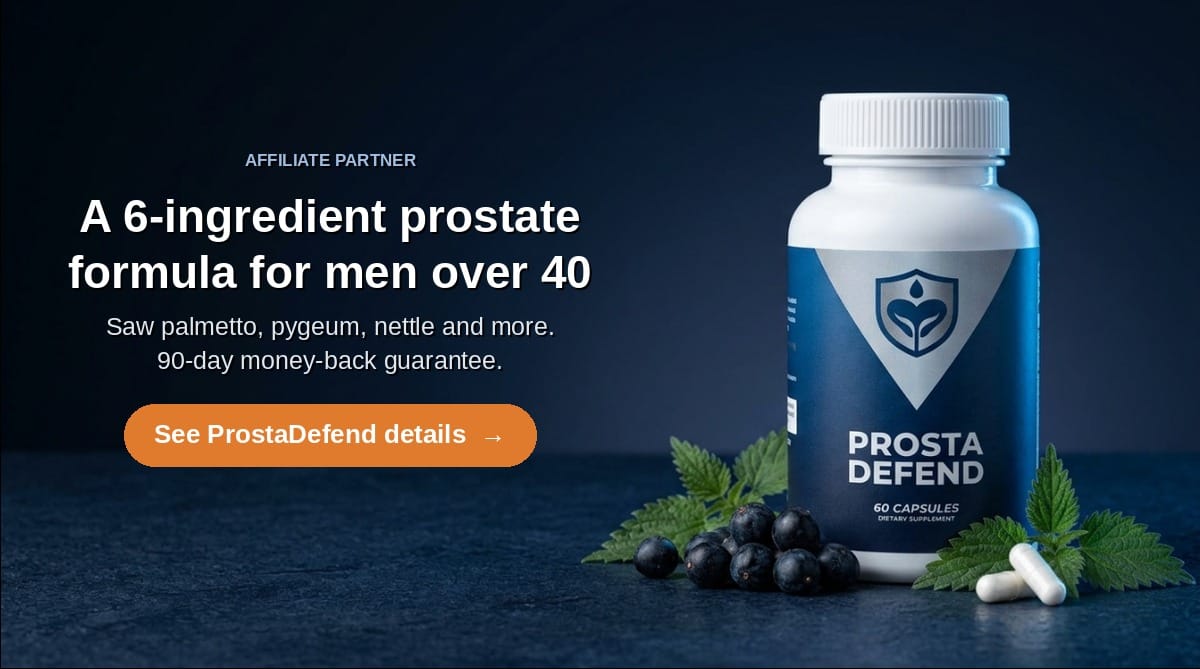
ProstaDefend combines pygeum and saw palmetto with stinging nettle and three other botanicals. The sales page does not state the amount of each ingredient, and the formula has not been tested in a trial. It is sold on its official site with a 90-day money-back guarantee.
For more options, see our full guide to the best prostate supplements and our comparison of beta-sitosterol vs saw palmetto.
Pygeum vs saw palmetto: which should you choose?
- Choose pygeum if night-time urination is your main complaint, or if saw palmetto has not helped you.
- Choose saw palmetto if you want the cheaper, more widely available herb and accept that it may do little.
- Choose a combination if you would rather take one product than two.
Give any of them two to three months. If your symptoms do not improve, talk to your doctor about treatments with stronger evidence. We compare them in BPH treatment options.
When should you see a doctor instead?
See a doctor for urinary symptoms that are new or getting worse, and quickly for blood in the urine, pain, fever or being unable to urinate. An enlarged prostate and prostate cancer can cause similar symptoms, as we explain in prostate cancer vs BPH.
Pygeum vs saw palmetto FAQ
Is pygeum better than saw palmetto?
Pygeum has slightly better results. A Cochrane review found a modest improvement in urinary symptoms, while saw palmetto worked about as well as placebo. The pygeum trials were small and short, so the evidence is not strong.
Can I take pygeum and saw palmetto together?
Yes. Many prostate formulas combine them. No good trial shows the pair works better than either herb alone, and there is no known harm in taking both.
How much pygeum should I take a day?
Trials used 75 to 200 mg of standardized bark extract a day. The usual dose is 100 mg a day, taken once or as 50 mg twice daily.
How long does pygeum take to work?
Most trials lasted one to two months. Give it two to three months of daily use before you judge it.
Does pygeum help with night-time urination?
It may. In pooled trials, men taking pygeum had about 19% fewer night-time bathroom trips than men taking placebo.
Does pygeum shrink the prostate?
No. No supplement has been shown to reduce prostate size.
What are the side effects of pygeum?
Side effects are uncommon and mild, mostly stomach upset. In trials they occurred about as often as with placebo.
Does pygeum contain beta-sitosterol?
Yes. Pygeum bark contains plant sterols, including beta-sitosterol, though in smaller amounts than a dedicated beta-sitosterol supplement.
Bottom line
In the pygeum vs saw palmetto comparison, pygeum has the better results and saw palmetto has the better trials. Pygeum modestly improved symptoms and night-time urination in small studies, while saw palmetto performed like placebo in large ones. Neither shrinks the prostate. Keep expectations modest and see your doctor about symptoms that persist.
References
- Wilt T, et al. Pygeum africanum for benign prostatic hyperplasia. Cochrane Database of Systematic Reviews, 2002.
- Franco JVA, et al. Serenoa repens for the treatment of lower urinary tract symptoms due to benign prostatic enlargement. Cochrane Database of Systematic Reviews, 2023.
- NIH NCCIH: Saw Palmetto.
This article is for information only and is not medical advice. Supplements are not intended to diagnose, treat, cure or prevent any disease.